 Return to all articles
 July 28, 2026
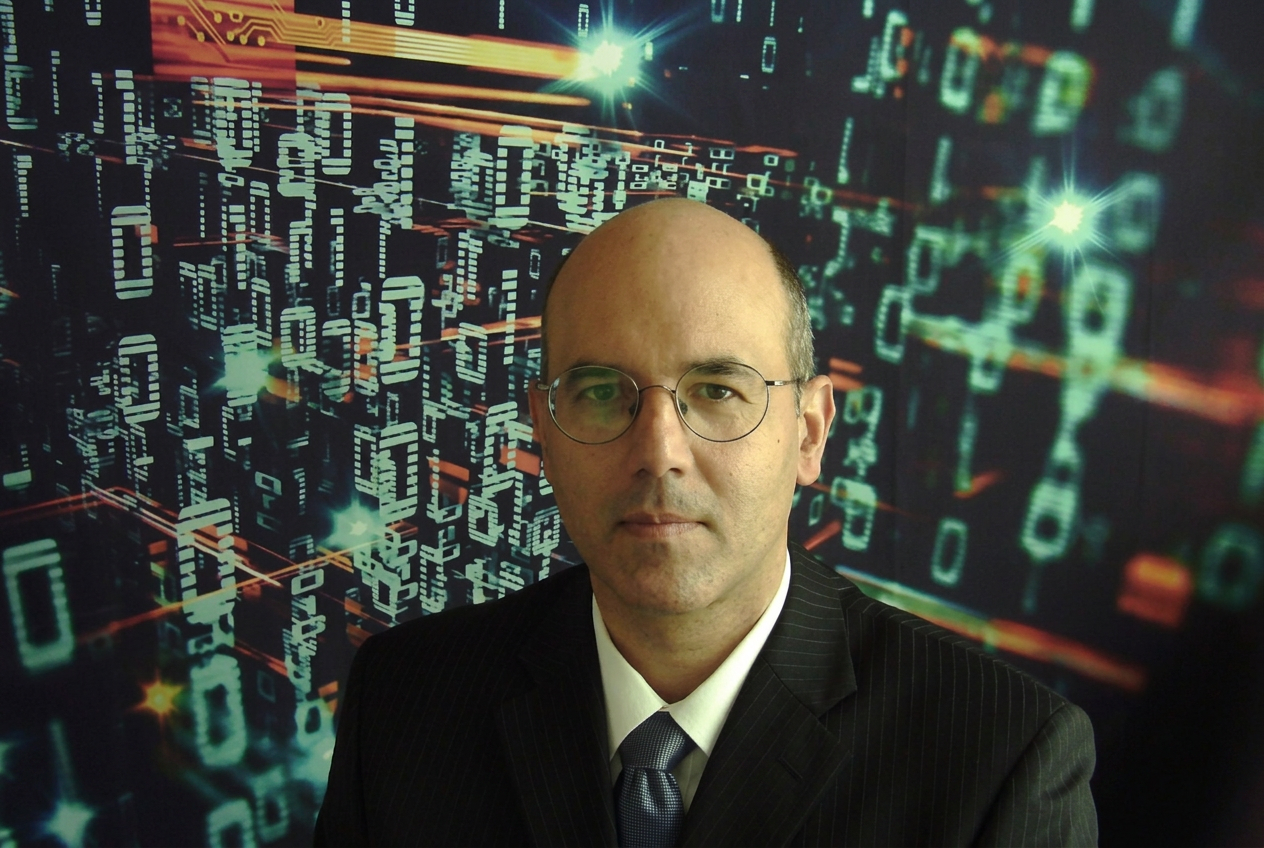
 Since earning his Doctor of Philosophy from the University of Salford in the United Kingdom in 2006, Armin Krishnan, PhD, has built a prolific body of work. He has authored dozens of books, articles, chapters, and other publications on topics ranging from the privatization of militaries to space weapons.
While his research spans a host of complex and often emerging subjects, one of Krishnan’s most attention-grabbing works is the book Killer Robots: The Legality and Ethicality of Autonomous Weapons.
“It grew out of my PhD research on the military-industrial complex and how it was changing,” Krishnan says. “I saw that software and services became much more important in the defense industry. And then I came across this whole idea of using unmanned platforms.”
Despite what the title and subject matter might suggest, Killer Robots is not a recent publication. Krishnan published it in 2009, making him one of those rare academics whose work has only grown more relevant over time.
He has continued to publish extensively and, since 2013, has shared his insights with Security Studies students at East Carolina University (ECU), positioning the school as a hub for the field’s next generation of leaders.
Bringing His Expertise to ECU
At the time he published Killer Robots, German-born Krishnan was a visiting assistant professor in El Paso, Texas. While he valued the opportunity to teach, research, and write there, he wanted to find a more permanent academic home.
“I was applying for jobs, and I had the great opportunity to do an interview at ECU. I was very excited to get started over here and to work very hard on my tenure,” Krishnan says. He points to the department’s collegial environment and strong support for professional development.
Since joining ECU, Krishnan has expanded both his research and his role within the university. In 2016, he became Director of Security Studies, overseeing both the Bachelor of Science and Master of Science in Security Studies programs.
“I had the opportunity to influence the direction they were going,” Krishnan says. “I had to learn how to deal with administrative tasks and undergo a lot of training. I was getting support for that job, and it was great.”
Launching the Online Security Studies Program
Once Krishnan was established in his role, he helped ECU begin a new chapter. In 2025, the university launched the online Bachelor of Science in Security Studies program. To support that effort, Krishnan and his colleagues worked closely with Project Kittyhawk, a nonprofit that helps institutions across the University of North Carolina system expand and refine their online programs.
“I wanted to be part of Project Kittyhawk because I think we needed more online offerings,” Krishnan says. He also developed several courses for the program, helping shape its curriculum from the ground up.
Today, the online format allows more students to learn much-needed skills from Krishnan and his colleagues.
Training the Next Generation of Security Leaders
In 2025, Krishnan stepped back from his director position to focus on research, giving him more time to work with ECU’s Security Studies students while continuing his scholarship on security and defense issues, including topics such as Havana Syndrome and shifting U.S. policy in the Middle East.
“We want to prepare our students largely for careers in the government. That can be law enforcement, the State Department, homeland security, or the military,” he says. “But also for careers in the private sector — think tanks and nonprofit organizations that deal with issues like human rights or international affairs.”
To support these career paths, students in ECU’s online Bachelor of Science in Security Studies program can choose electives in areas such as organized crime, weapons of mass destruction, and foreign policy.
Krishnan emphasizes the program’s interdisciplinary approach as a defining feature.
“We consider security studies to be an interdisciplinary field, and we include other kinds of disciplines in our programs such as criminal justice, religious studies, history, and political science,” he says. “It’s quite unique.”
Sound Decision-Making: A Top Skill for Today’s Security Professionals
While ECU’s Security Studies students can tailor their coursework and build career-specific skills, Krishnan emphasizes one key skill: the ability to make logical and ethical decisions.
“I think that is really important, especially in the time of AI,” Krishnan says. “There is a big temptation to use AI as a shortcut, but the reality is that AI is often wrong. And if you can’t do the reasoning yourself, you will often be wrong.”
Krishnan helps his students hone this skill through writing-focused intelligence analyses, where students apply the methodologies they learn in class to real-world intelligence problems.
“Before you write something down, you don’t really understand it,” he says. “The understanding only comes after you express it clearly on paper or on the screen.”
Supporting Students Out of the Classroom
Krishnan’s analysis exercises are a great way for online students to get hands-on experience while maintaining the flexibility their schedules demand. However, Krishnan says anyone who wants more real-world learning opportunities can use ECU as a launching pad.
“We can advise them about which organizations offer internships,” he says. “We have had some students who were successful getting internships with the FBI, the NSA, the Department of Homeland Security, and with the State Department.”
Whether students are interested in protecting critical infrastructure, drafting foreign or domestic policy, or serving their communities, Krishnan and his colleagues help them build the skills needed to pursue those paths through hands-on, research-driven learning.
Launch Your Security, Intelligence, or Emergency Management Career Today
Designed with working and transfer students in mind, the online Bachelor of Science in Security Studies program at East Carolina University balances flexibility with a rigorous, career-focused curriculum. Under the guidance of experienced faculty such as Armin Krishnan, PhD, students learn how to plan for, mitigate, and respond to security crises at every level.
To learn more about the program and how it can support your career goals, request information from East Carolina University today.
Recommended Readings
4 International Security Careers to Consider