 Return to all articles
 July 28, 2026
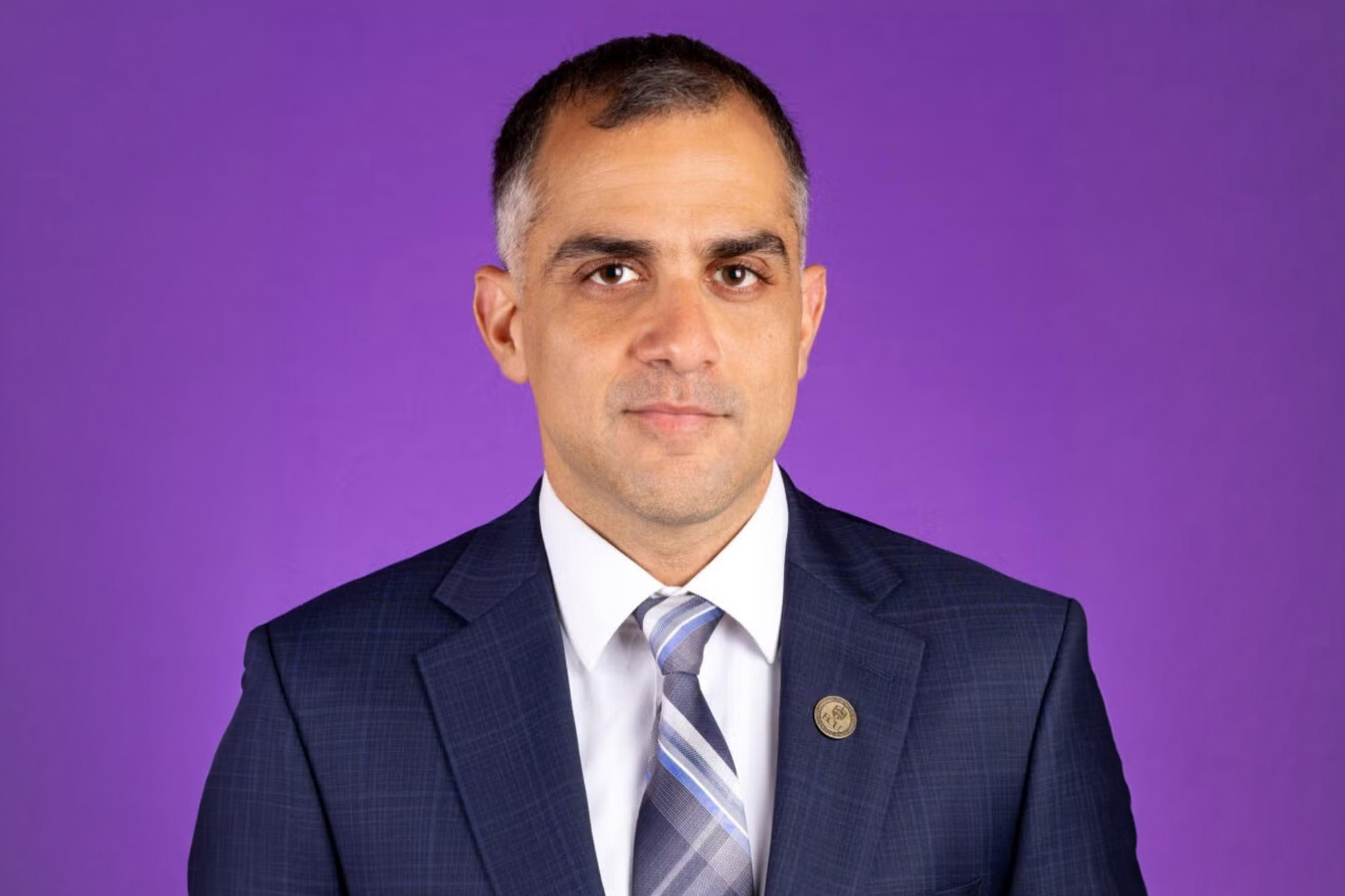
 For Dr. Hanna Kassab, security studies is compelling because it never stands still. The field asks urgent questions about power, conflict, intelligence, international relations, and uncertainty—questions that are constantly evolving.
That dynamism is part of what drew Kassab to international politics in the first place. He initially considered a path in business, but everything changed after one university course. “I fell in love with my first international politics class,” he says. “I just couldn’t get away.” From there, he knew he wanted to spend his life studying, teaching, and writing about international affairs.
Today, as an associate professor in the online Bachelor of Science (BS) in Security Studies program at East Carolina University®, Kassab helps students explore the real-world stakes of security, intelligence, foreign policy, and public service. His teaching style is practical, energetic, and rooted in a central goal: helping students think critically about a complex world.
Why Security Studies Matters
Kassab’s academic interests center on grand strategy, especially the role of the United States in the international system. He’s interested in how countries preserve power, defend national interests, respond to competitors, and make difficult decisions in moments of global uncertainty.
That uncertainty is one reason he finds the field so engaging. “You’re never bored,” he says. “There’s always something going on.” For students, that means security studies offers more than abstract theory. It provides a framework for understanding the headlines, conflicts, alliances, and policy debates shaping the world around them.
His current research continues to explore major questions about American power. After coauthoring a book on the decline of the United States, he’s now thinking about what he calls “hegemonic restoration”: how the United States might recover strength, respond to competitors, and navigate a changing global order.
Making Complex Ideas Relatable
Security studies can involve dense theories and difficult material. Kassab believes one of the best ways to help students engage with complicated ideas is to make them concrete. “Passion is very important,” he says, “and to articulate that passion or communicate that passion to students is very important.”
He often turns to familiar examples—food, movies, and even video games—to help students understand concepts such as nationalism, realism, postcolonialism, organized crime, and power politics.
To Kassab, relatable examples aren’t a way around serious scholarship; they’re a way into it. Food can become a lens for discussing national identity and cultural ownership. Film can help students understand cultural domination, international relations, and conflict. Video games can illuminate issues such as corruption, trafficking, and organized crime.
In class, he’s used films such as “Planet of the Apes” to discuss postcolonialism and oppression and “The Godfather” to explain realism and the logic of power in an anarchic environment. “‘The Godfather’ is all about a state or a family that’s defending its interests in anarchy where there’s no laws, where laws don’t matter,” he says. “You have to be the toughest person on the block.”
He’s also pointed to video games such as Max Payne 3 as a way to think about narco-trafficking, corruption, supply chains, organized crime, and human trafficking.
These examples help students connect complex theories to stories, characters, conflicts, and choices they can recognize. As Kassab puts it, the goal is “simplifying, making it fun, entertaining, and holding their attention.”
Teaching Students to Think From More Than One Perspective
One of the most important skills Kassab teaches is critical thinking. In his courses, that means encouraging students to move beyond familiar assumptions and learn how to analyze problems from different theoretical perspectives.
He often asks students to apply three major schools of thought: realism, liberalism, and constructivism. Each approaches international relations differently. Realism tends to focus on power and competition. Liberalism emphasizes institutions, cooperation, and interdependence. Constructivism considers how ideas, culture, and identity shape political behavior.
By using these perspectives, students learn how to make arguments from different angles, including positions they may not personally hold. This matters well beyond the classroom. Whether graduates pursue careers in intelligence, public service, foreign policy, emergency management, law enforcement, or the private sector, they’ll need to evaluate competing claims, navigate uncertainty, and communicate clearly with people who see the world differently.
Simulations Bring Real-World Uncertainty Into the Online Classroom
Kassab uses simulations to help students practice decision-making in high-stakes scenarios. In one example, he designed a scenario involving North Korea, Iran, intercepted nuclear weapons, and multiple regional actors. Students had to determine what could be known, what remained uncertain, and how different countries might respond.
That uncertainty is the point. The exercise asks students to confront a central problem in security studies: Decision-makers rarely have perfect information.
“We will never know for sure what is actually happening,” Kassab says. “Our theories help us understand.”
In online courses, simulations take place through Canvas discussion boards. Students issue public statements, negotiate through private messages, and make strategic decisions based on the interests of the actors they represent. Kassab sets up the exercise so that students may issue public statements in online forums while negotiating through private “backdoor” communications. Sometimes information gets shared in unexpected ways, mimicking the messiness of real diplomacy and crisis management.
These simulations help students see how states operate under pressure, how uncertainty shapes decision-making, and how theory can be used to interpret real-world problems. Leaders, analysts, and policymakers often have to act while weighing incomplete intelligence, competing interests, and uncertain outcomes.
“It’s very realistic,” he says. “Students are expected to defend their interests.”
A Program Defined by Faculty With Different Perspectives
When asked what ECU’s Security Studies program does best, Kassab points to the faculty. “I think it’s our professors,” he says. Describing the learning and teaching environment, Kassab notes, “It’s incredibly enriching.”
He mentions other professors in the department whose work focuses on weapons of mass destruction, terrorism, intelligence, artificial intelligence (AI), and other urgent issues in modern security. He values being part of a program in which faculty members don’t all think the same way.
“I don’t want to be in a place where everyone thinks the same,” he says. “That would be so strange.”
That diversity of viewpoints is part of what prepares students for the real world. In security studies, there’s rarely only one interpretation of an event, conflict, or policy decision. Students learn that thoughtful experts can disagree—and that disagreement can sharpen their own thinking.
“The world is very complex,” he says. “People are going to say different things about something.”
Advice for Online Students: Connect With Your Professors
For prospective and current online students, Kassab’s advice is clear: Get to know your professors.
“The best thing that you can do is get acquainted with your professor,” he says. “We want to hear from you. We want to hear what your thoughts are.”
Online learning offers flexibility, but he encourages students not to remain only a name on a roster or a participant in a discussion board. Instead, he recommends reaching out, attending office hours, or asking for phone or video conversations.
Those relationships can help students clarify their goals, learn about opportunities, and prepare for what comes after graduation. Faculty members can also become important mentors and references.
“You’re going to need letters of recommendation,” Kassab says. “So, you might as well get in touch.”
Preparing Students for Meaningful Careers
Kassab finds it rewarding to help students pursue careers in security, intelligence, foreign policy, public service, and related areas. He enjoys hearing from students who go on to internships or professional roles and return with new perspectives about how security work happens in practice.
“If I can live vicariously through a student, that is so rewarding,” he says. “I have an incentive to ensure that you succeed.”
He also encourages students to enjoy the learning process itself. Security studies can be challenging, but it can also be exciting. It gives students tools to understand conflict, power, strategy, and global change.
“Just have fun,” Kassab says. “Enjoy the time that you have learning.”
Explore International Relations and National Security With ECU
Are you interested in studying security, strategy, and international affairs in a flexible online format? ECU’s online BS in Security Studies program helps students explore the complex issues shaping today’s security landscape, from intelligence and foreign policy to homeland security, emergency management, and international conflict.
To find out more about ECU’s curriculum, flexible transfer credit policies, and more, contact an admissions representative today.
Recommended Readings
Career Road Map for Security Studies Degree Graduates